How Shipyards Deliver
A finished hull is not a finished ship. Delivery depends on coordinated design, production, integration, testing and documentation.
Define the ship before cutting the steel
A shipbuilding project begins with requirements: the intended service, cargo or mission, operating environment, performance expectations and applicable rules. The owner’s specification and the building contract establish important obligations, but engineering information must translate those requirements into an arrangement that can be built and operated.
Design work develops through overlapping levels of detail. Structural arrangements, machinery selection, electrical loads and system routes must be coordinated. Long-lead equipment may need purchasing before every production drawing is complete. That makes change control important: a revised piece of equipment can affect foundations, access routes, ventilation or power requirements elsewhere in the ship.
The yard’s capability is therefore partly organisational. A large dock does not demonstrate the ability to manage design interfaces, suppliers and production information. When reading a project announcement, look for the responsible design and integration roles as well as the physical building location.
Approval also has a defined scope. A classification society’s review of specified drawings is not a blanket approval of every commercial promise made about the vessel.
Build accessible units, then join them
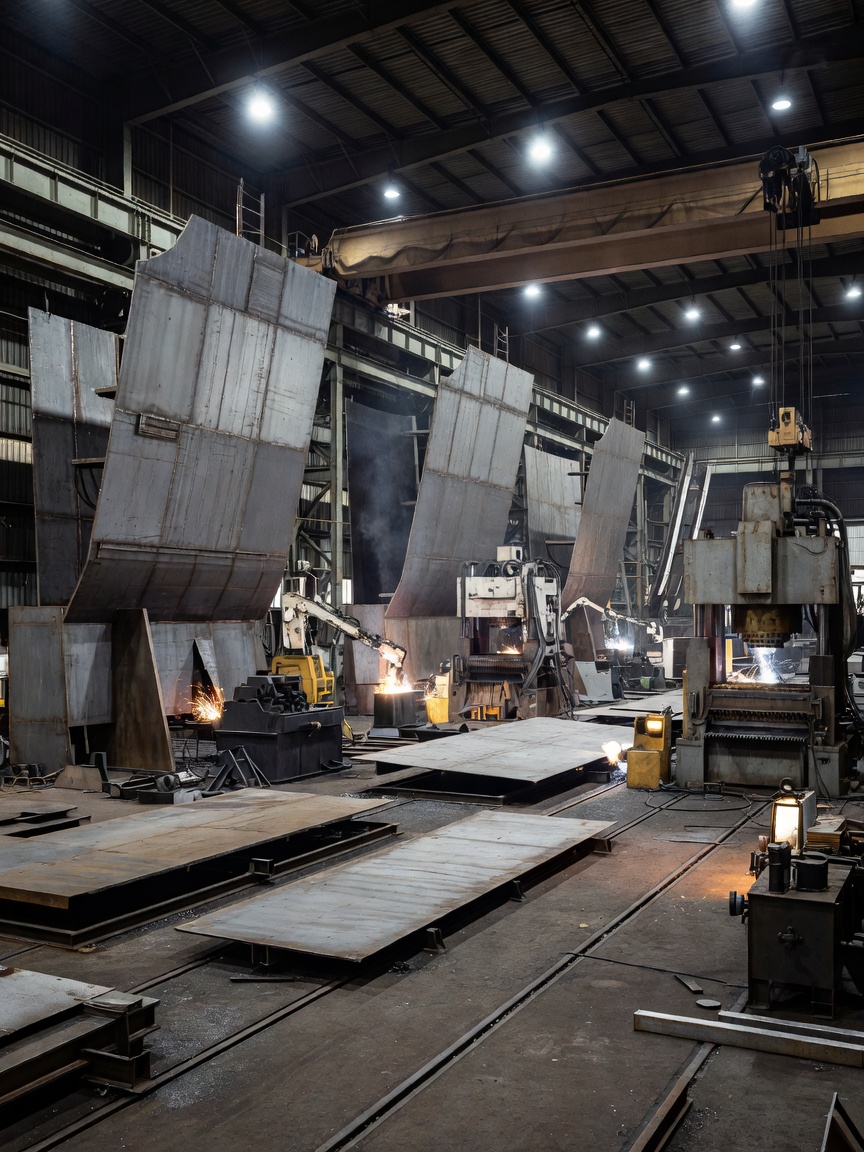
Steel plates and sections are cut, formed and assembled into panels and blocks. The chosen subdivision reflects the design, workshop layout, lifting limits and production sequence. A block is not merely a convenient piece of hull: it can be an opportunity to complete work while access is better than it will be after assembly.
Pre-outfitting may include pipework, foundations, cable supports and other equipment, depending on the yard’s process. Completing suitable tasks early can reduce difficult work in confined spaces later. However, the sequence must protect installed items and allow for inspection, alignment and joining operations.
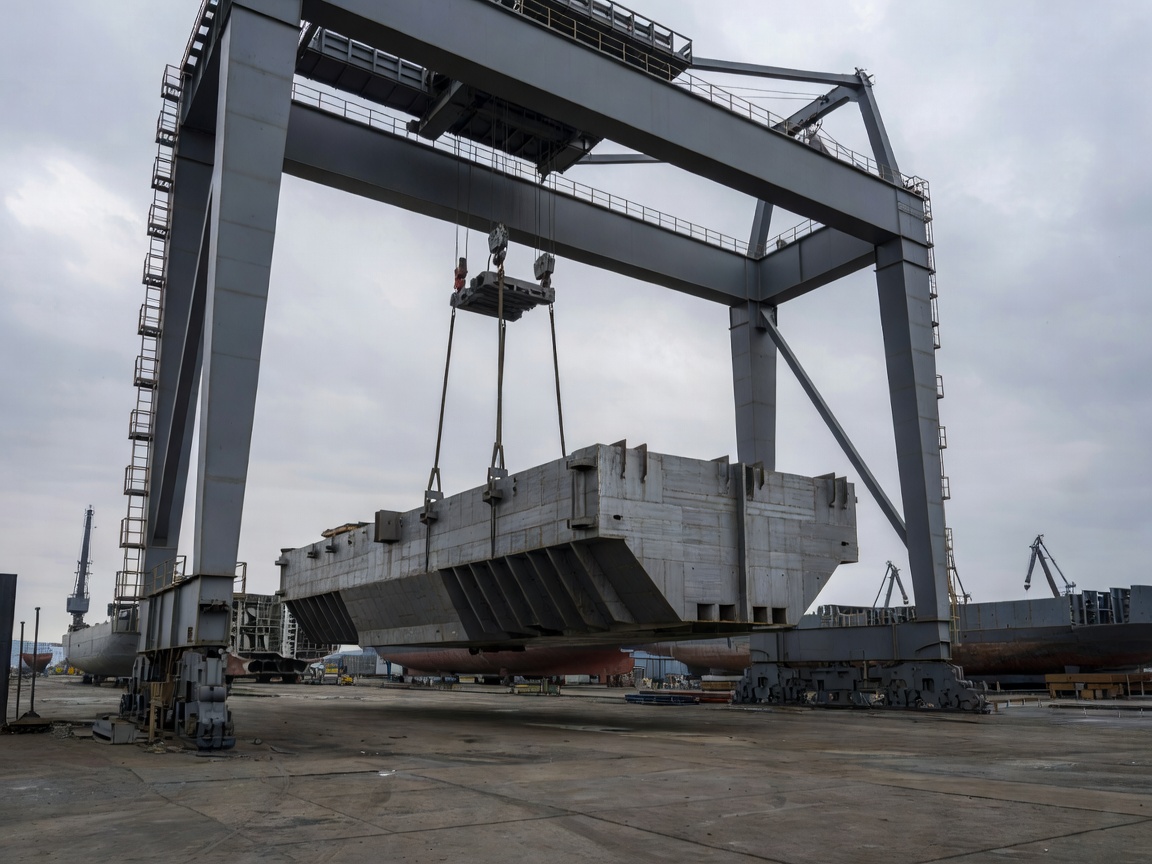
Blocks are brought together in a building dock, on a slipway or through another facility-specific arrangement. Dimensional control matters because small differences can accumulate across a large structure. Welding procedures, inspections and material traceability form part of the documented production system rather than optional finishing tasks.
A dramatic crane photograph captures only one moment. It does not establish annual throughput, the available workforce or how smoothly the surrounding production stages are coordinated.
Track milestones without confusing them
- Steel cuttingA manufacturing milestone, not proof that the entire design is frozen.
- Keel laying or equivalent assembly milestoneA defined construction event whose practical form varies with production method.
- Launch or float-outThe hull becomes afloat; substantial integration work may remain.
- Commissioning and trialsEquipment and ship functions are tested against relevant procedures and requirements.
- Delivery and acceptanceContractual handover occurs under the terms agreed by the parties.
Outfitting brings together propulsion, electrical distribution, controls, accommodation and mission or cargo systems. Harbour tests can verify many functions before sea trials. At sea, the test programme may examine propulsion performance, steering, manoeuvring and other specified characteristics. The exact scope depends on the ship and its requirements.
Trials should not be described as a single universal pass-or-fail event. Findings can lead to adjustments, retesting or agreed actions. Public announcements may omit those details, so a research profile should report the milestone actually documented rather than assume all remaining work is complete.
Separate class, regulation and acceptance
Classification societies such as DNV, Lloyd’s Register and ABS establish technical rules and conduct reviews and surveys within their agreed scope. The International Association of Classification Societies, IACS, develops common technical requirements and related work for its member societies. IACS is not the builder or the owner’s acceptance team.
The International Maritime Organization develops international instruments, including SOLAS and MARPOL. Flag administrations implement applicable statutory requirements; recognised organisations may perform authorised tasks on their behalf. Classification and statutory certification are connected in practice, but they should not be treated as identical responsibilities.
The owner and yard also have contractual obligations that extend beyond class scope. A ship being in class does not independently confirm every promised commercial outcome, every accommodation finish or every operating cost assumption. Conversely, contractual delivery should not be misreported as proof of lifetime performance.
For a defensible delivery record, identify the vessel, yard and documented milestone. Preserve the distinction between launch, trials, certification and handover. If the source says only that sea trials began, that is the claim the record should make.
Primary-source starting points
- DNV Maritime — classification and technical rules
- Lloyd’s Register — classification and maritime services
- ABS — rules and classification information
- IACS — common requirements and classification context
- IMO — SOLAS, MARPOL and the international regulatory framework
This is a process overview, not a construction procedure or compliance checklist. Applicable editions, vessel particulars and project responsibilities require professional verification.
Continue to Shipbuilder Questions